గులాబి ముఖం లవ్ బర్డ్
| గులాబి ముఖం లవ్ బర్డ్ | |
|---|---|

| |
| నమీబియాలో, ఆఫ్రికా | |
| శాస్త్రీయ వర్గీకరణ | |
| Kingdom: | Animalia
|
| Phylum: | |
| Class: | |
| Order: | |
| Family: | |
| Genus: | |
| Species: | A. roseicollis
|
| Binomial name | |
| Agapornis roseicollis (Vieillot, 1818)
| |

| |
| సహజ నివాస ప్రాంతాలైన నమీబ్ ఎడారి , నమీబియా, అంగోలాలోని పాక్షిక ఎడారి ప్రాంతాలు. | |

గులాబి ముఖం లవ్ బర్డ్ (అగాపోర్నిస్ రోసీకోల్లిస్) లేదా పీచ్ ముఖం కల లవ్ బర్డ్ అనేది లవ్ బర్డ్ లలోని ఒక జాతి. ఇవి ఆగ్నేయ ఆఫ్రికాలోని పాక్షిక ఎడారి ప్రాంతాలైన నమీబ్ ఎడారి లాంటి ప్రాంతాలకు చెందినవి. పెద్దగా, ఆపకుండా కిచ, కిచ శబ్దాలు చేసే ఇవి సాంఘిక జీవులు. ప్రకృతిలో ఇవి చిన్న, చిన్న గుంపులుగా నివసిస్తాయి. పగలంతా మేత తింటూ, తరచుగా స్నానాలు చేస్తాయి. వీటి శరీర రంగులు వివిధ రకాలుగా ఉన్నప్పటికీ ఆడ పక్షులు ఎక్కువ చిలక పచ్చగా, ముదురు రంగులలో ఉంటాయి. మగవి చిన్నగా, ప్రకాశవంతంగా ఉంటాయి. లవ్ బర్డ్స్ అనేవి ఎక్కువగా అవి నిద్ర పోయే పద్ధతి వల్ల ప్రాచుర్యం పొందాయి. అవి పక్క, పక్కన కూర్చుని, ఒకదాని ముఖానికి ఒకటి ఆనించి ఉంటాయి. ఆడ పక్షులు పదార్థాలని పొడుగాటి పీలికలుగా చేసి, వాటిని వంటికి చుట్టుకుని, గూళ్ళకి ఎగరడంలో నేర్పరులు.
శాస్త్రీయ విభజన[మార్చు]
1818లో లూయిస్ జీన్ పియర్రే వయొల్లోట్ అనే ఫ్రెంచి పక్షి శాస్త్రజ్ఞుడు దీనిని గురించి వివరించాడు. మొదట్లో వీటికి ప్సిట్టాకస్ రోజీకొల్లిస్ అని నామకరణం చేసినా తరువాత వీటిని అగాపోర్నిస్లోని ఇతర లవ్ బర్డ్స్ తో కలిపారు. రెండు ఉపజాతులు గుర్తించారు:[2]
- అగాపోర్నిస్ రోజీకొల్లిస్, (Vieillot, 1818)
- అగాపోర్నిస్ రోజీకొల్లిస్ కటుంబెల్లా, B.P. Hall, 1952 - అంగోలా[3]
- అగాపోర్నిస్ రోజీకొల్లిస్ రోజీకొల్లిస్, (Vieillot 1818) - నమీబియా, బోట్సువానా, , దక్షిణ ఆఫ్రికా[3]
రూప వర్ణన[మార్చు]
గులాబి ముఖం లవ్ బర్డ్ అనేది ఒక చిన్నపక్షి. సరా సరి 17,18 సెం.మీ. పొడవు, 10.6 సెం.మీ.రెక్కల బారు, 4.4 నుంచి 5.2 సెం.మీ.పొడవు గల తోక ఉంటాయి.[4] స్వేఛా పక్షులు ఎక్కువ శాతం చిలక పచ్చ, నీలం రంగులు కలిసిన రంగులో ఉంటాయి. ముఖం, గొంతు మాత్రం లేత గులాబి రంగులో ఉండి ముక్కు, కల్ల పైన ముదురు గులాబి రంగు ఉంటుంది. ముక్కు పశువుల కొమ్ముల రంగులో ఉండి, కంటి పాప గోధుమ రంగులో ఉంటుంది. కాళ్ళు, పాదాలు బూడిద రంగులో ఉంటాయి. గులాబి రంగు అనేది కటుంబెల్లా. రకంతో పోలిస్తే రోజీకొల్లిస్ది లేతగా ఉంటాయి.[3] పిల్ల చిలుకల గొంతు, ముఖం మరీ లేత గులాబి రంగులో ఉండి తల నడినెత్తి చిలకపచ్చగా ఉంటాయి. ముక్కుకి గోధుమ రంగు మొదలు ఉంటుంది.[3]
విస్తరణ, నివాసం[మార్చు]
ఇవి ఆగ్నేయ ఆఫ్రికాలోని పొడి వాతావరణంలో నివాసం ఉంటాయి. వీటి పరిధి ఆగ్నేయ అంగోలా నుండి పూర్తి నమీబియా, నైఋతి దక్షిణ ఆఫ్రికాలోని ఆరెంజ్ నది లోయ వరకు విస్తరించి ఉంటుంది. ఇవి సముద్ర మట్టాన్నుంచి 1600 మీ. ఎత్తువరకు వెడల్పు ఆకులు గల అడవులు, పార్షిక ఎడారి ప్రాంతాలు, పర్వత ప్రాంతాలలో ఉంటాయి. వీటి నివాసం నీటి ఆధారంగా ఉంటుంది. ఇవి నీటి గుంతలు, చెరువుల వద్ద నీటికోసం గుమి కూడతాయి. ప్రపంచంలోని చాలా ప్రాంతాల్లో ఇవి పంజరాల్లోంచి తప్పించుకోవటం వీటికి సాధారణం. అలా తప్పించుకున్న పక్షులు అరిజోనా, లండన్లో నివసిస్తుంటాయి.
లభ్యత , రక్షణ చర్యలు[మార్చు]
పెంపుడు జంతువుల వ్యాపారం కోసం పట్టుకోవటం వల్ల కొన్ని చోట్ల వీటి సాంద్రత తగ్గిపోయింది. కానీ ఇతర చోట్ల వీటి సంతతి మనిషి వల్ల, కొత్త నీటి వనరుల వల్ల, గూడు కట్టుకోవటానికి అనువైన పరిస్థితులు కల్పించడం వల్ల పెరిగింది. అందువల్ల వీటిని అంతర్జాతీయ ప్రకృతి పరి రక్షణ సంస్థ వీటిని ఆందోళన అవసరంలేని జాతిగా ప్రకటించింది.
సహజ నివాసాలలో ప్రవర్తన[మార్చు]

గులాబి ముఖంకల లవ్ బర్డ్స్ కి రకరకాల మొరటైన, గంభీరమైన పిలుపులు ఉంటాయి.
ఆహారం[మార్చు]
ఆహారం ఎక్కువగా విత్తనాలు, పండ్లు. ఆహారం కావల్సినంత ఉన్నప్పుడు ఇవి వందల సంఖ్యలో గుమికూడతాయి. కొన్ని సజ్జ లాంటి వ్యవసాయ ప్రాంతాలలో వీటిని పంట నాశినులుగా చూస్తారు.
సంతానోత్పత్తి[మార్చు]
ఒక జంటని పట్టుకోవటం ఈ పక్షులలో ఎంతో కష్టం. వీటిలో ఆడ, మగని వాటి తుంటి ఎముక వెడం ద్వారా గుర్తిస్తారు. మగవాటిలో ఇది 1-3 మి.మీ. గానూ[ఆధారం చూపాలి],ఆడ వాటిలో ఇది 6 - 8మి.మీ.గానూ ఉంటుంది[ఆధారం చూపాలి]. వీటి గూళ్ళు, రాళ్ళలో గానీ, పెద్ద, పెద్ద సాంఘిక గూళ్ళలో (సాంఘిక నేతగాడు నేసిన) గానీ, మనుషుల ఆవాసాలైన ఇళ్ళు, ఇతర స్థావరాలలో కూడా కడతాయి. విడతకి 4-6 గుడ్లు ఫిబ్రవరి, ఏప్రిల్ ల మధ్య పెడతాయి. అవి పేలవమైన తెల్లని రంగులో 2.5 నుంచి.1.8 సెం.మీ. మధ్య ఉంటాయి. 23 రోజులు పొదిగాక పిల్లలు వస్తాయి. 43 రోజులకి పిల్లలకి రెక్కలు వస్తాయి.[4]
ప్రమాదాలు , విషములు[మార్చు]
- అవకాడో పండు
- ఆల్కహాల్
- కుక్క, పిల్లి కార్చే చొంగ
- ఇంట్లో వాడే సబ్బులు, డిటర్జెంట్లు
- వాసన వచ్చే మైనపు వత్తులు[5]
- కిరసనాయిలు, పెట్రోలు వంటివి
- Colour varieties in aviculture
-
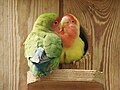 Pair at nestbox
 -
 చెక్క గూటిలో పిల్లలు, గుడ్లతో ఉన్న లవ్ బర్డ్
 -
 ఆడుకుంటున్న పెంపుడు లవ్ బర్డ్
 -
 పిల్ల లవ్ బర్డ్
 -
Pair at nestbox
-
 Wild type
 -
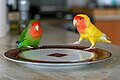 Left: Wild type
Right: Lutino -
 Left: Wild type
Right: Pied Wild Green
-2.JPG)


మూలాలు[మార్చు]
- ↑ BirdLife International (2008). Agapornis roseicollis. In: IUCN 2008. IUCN Red List of Threatened Species. Retrieved 4 March 2009.
- ↑ "Zoological Nomenclature Resource: Psittaciformes (Version 9.004)". www.zoonomen.net. 2008-07-05.
- ↑ 3.0 3.1 3.2 3.3 Forshaw (2006). plate 45.
- ↑ 4.0 4.1 McLachlan G. R. & Liversidge, R. (1981) Roberts Birds of South Africa, John Voelcker Bird Book Fund, Cape Town. ISBN 0-620-03118-2
- ↑ "ఆర్కైవ్ నకలు". Archived from the original on 2011-07-07. Retrieved 2010-04-19.
బయటి లింకులు[మార్చు]

- http://datazone.birdlife.org/home
- Luft, Stefan (2007): Parrots of Africa (1st edition). Halberstadt, Germany. ISBN 978-3-8334-8445-2
- Peach Faced Lovebird mutation information Information on PFLB mutations
- Harga Lovebird Terbaru Archived 2019-07-15 at the Wayback Machine More information and photos, Peach Faced Lovebird
- www.roseicollis.net Peach-faced website for breeding information.
- www.roseicollis.info Archived 2020-03-04 at the Wayback Machine French website
- Peach-faced Lovebird Range Expansion Data in Greater Phoenix, Arizona
- African Love Bird Society Archived 2009-04-16 at the Wayback Machine An international organization dedicated to the keeping, breeding, and showing of Love Birds.
- Yahoo Groups Lovebird List The largest lovebird list on the Internet
- Baby Peach Faced Lovebird[permanent dead link] Photos of each day of growth
- ISBN మ్యాజిక్ లింకులను వాడే పేజీలు
- Invalid conservation status
- Articles with 'species' microformats
- Taxobox articles missing a taxonbar
- మూలాలు చేర్చవలసిన పాఠ్యమున్న వ్యాసాలు
- మూలాలు చేర్చవలసిన పాఠ్యమున్న వ్యాసాలు from June 2009
- Commons link is on Wikidata
- All articles with dead external links
- Psittaculini
- పెంపుడు పక్షులు
- అగపోర్నిస్
- ఆఫ్రికా పక్షులు